
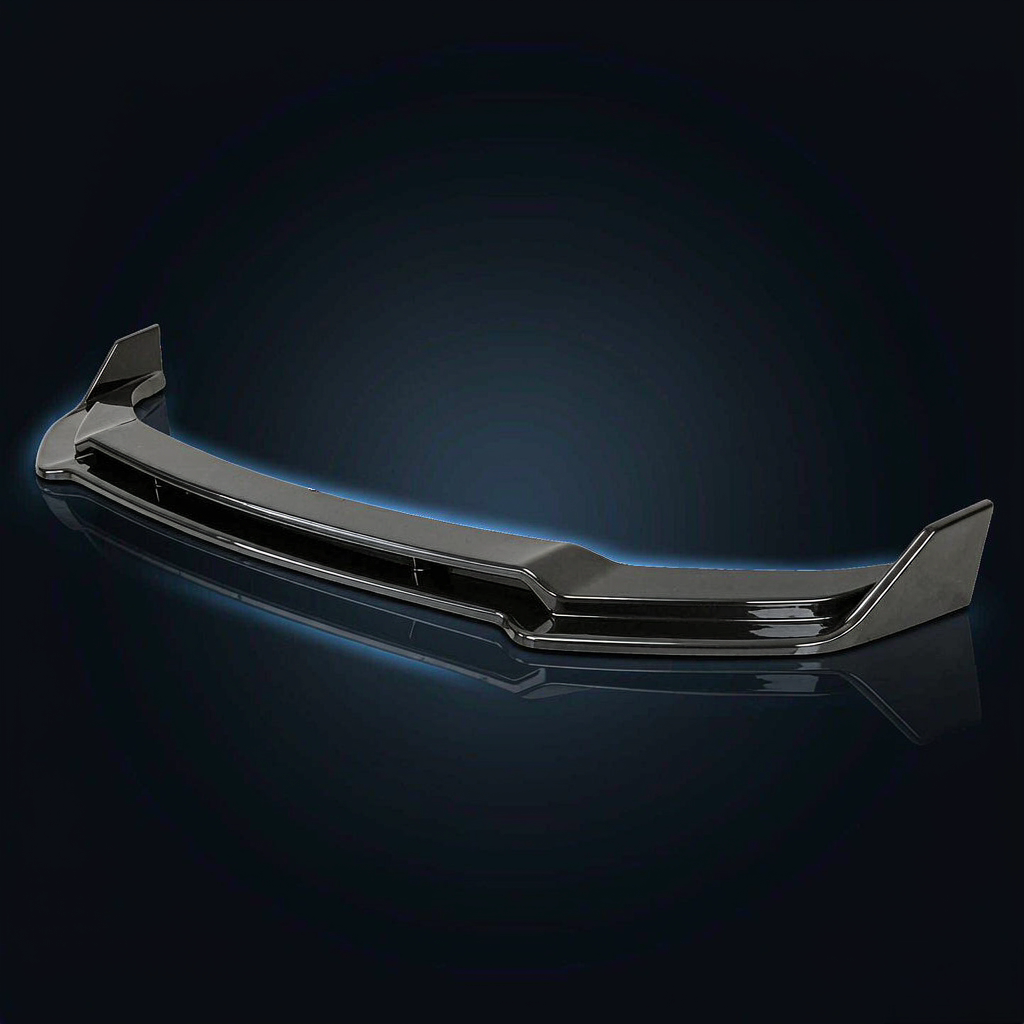
“Universal fit” is the most expensive phrase in the aftermarket parts business — expensive for the buyer, because it usually means you will be the one making it fit, and expensive in return freight when it does not.
For a body part, fitment is not one fact. It is a stack of five facts, and getting any one of them wrong sends the part back.
The five facts a fitment note has to contain
1. Year range, tied to the generation code
“2012–2018” is not enough on its own, because manufacturers run overlapping years during a generation change. What you want is the platform code: BMW F30 versus G20, Audi B8 versus B8.5, Mercedes W205 versus W206. A supplier who quotes a code knows what they are selling. A supplier who only quotes years is guessing, or worse, repeating a marketplace listing.
2. Body style
Sedan, coupe, wagon, and convertible frequently share a front bumper but differ at the sides and rear. A side skirt that fits the sedan will not fit the coupe, even in the same year, even in the same trim. This is the single most common fitment failure on side skirts and rear diffusers.
3. Trim and bumper variant
On European platforms especially, the same model year can have two or three front bumper shapes: standard, sport, and an M/S-line/AMG package. A front lip designed for the standard bumper will not mount to the sport bumper — the lower edge curvature and the mounting points are different. If a listing does not ask you which bumper you have, it does not have the data to sell you the right part.
4. Sensor and cutout configuration
Modern bumpers carry parking sensors, fog lights, tow hook covers, and increasingly a radar unit for adaptive cruise. A lip that covers a sensor hole either disables a system or requires you to cut a hole in a painted part. Neither is a pleasant surprise. Ask specifically: does this part clear PDC sensors, and does it retain the tow hook access.
5. Drivetrain and suspension variant where it matters
For anything that mounts low — lips, splitters, skirts — ride height matters. A part that clears on a standard suspension can scrape on a lowered car, and a part designed around an all-wheel-drive floor pan can sit differently on a rear-drive car. For suspension parts, this becomes the primary fact rather than a footnote.
How to read a fitment chart properly
A real chart reads as a grid: rows are model years, columns are trim or body variants, and the cells say which part number applies. Two things separate a good chart from a decorative one:
- There are notes. A note like “not for M Sport bumper” or “requires removal of factory lip” is a sign somebody actually installed the part.
- There are gaps. A chart that claims every year and every trim is a chart that was typed, not tested. Honest charts have holes in them.
Why this matters more on custom parts
With a mass-produced part, a wrong fitment is an inconvenience. With a made-to-order part, it is a scrap. Custom parts are produced against a specific specification, and once the tooling has run, there is no shelf to put it back on.
That is why we confirm fitment in writing before production starts, and why we ask for the VIN rather than the model name. A VIN resolves the year, the plant, the trim, and the options in one step — including the options that do not appear in the model name, like whether the car left the factory with a sport bumper.
What to send us
- VIN, or the full year, make, model, generation code, and trim
- A photo of the current bumper or the area the part mounts to — this catches the trim variant faster than any description
- Whether the car is lowered, and by how much
- Whether you need to keep sensor or tow hook access
With those four things we can tell you yes or no in writing, and if the answer is no, we will tell you what would fit instead. That is a shorter conversation than a return.
Send your VIN and photos here, or browse exterior styling parts to see the platforms we cover.
Related reading
- Hubcentric vs lugcentric wheel spacers — the same fitment logic, applied to the wheel hub
- Lift kits vs leveling kits — what changes when you raise the vehicle the part has to clear