
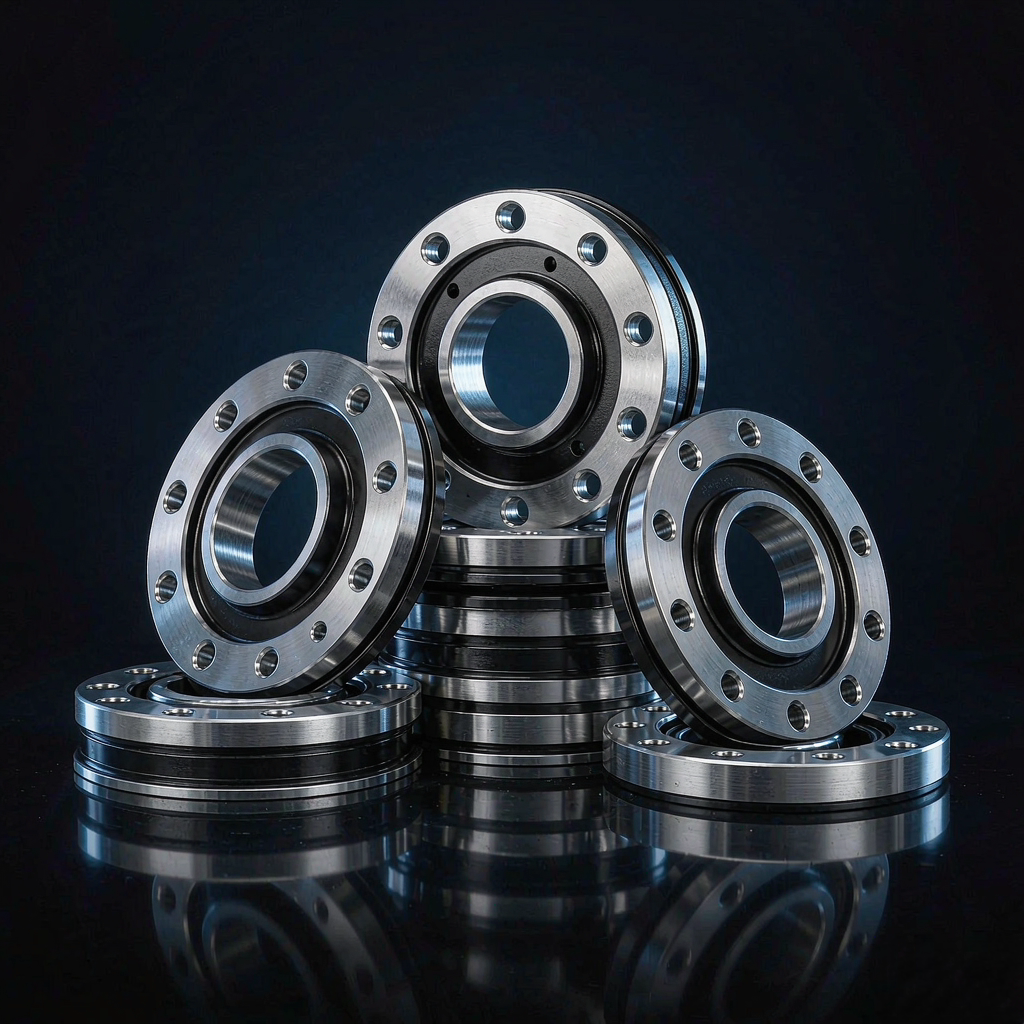
Wheel spacers are one of the simplest parts on a car and one of the easiest to get wrong. Ordered correctly, they solve a fitment problem. Ordered wrong, they introduce a vibration you will chase for weeks.
What spacers actually do
- Clearance: move the wheel outward so larger brake calipers or suspension components fit.
- Stance and track width: push wheels flush with the arches, widening the track slightly.
- Correction: fix a wheel that rubs the inner liner or control arm.
Hubcentric vs lugcentric — the whole argument in one paragraph
On a hubcentric setup, the wheel centres on the hub’s raised lip (the bore). The studs and nuts then only have to clamp, not centre. On a lugcentric setup, the wheel centres on the studs themselves, which are not a precision locating feature.
Modern cars are hubcentric. If you add a spacer that is flat with just holes in it, you have converted a hubcentric car to lugcentric — and vibration at speed is the usual result.
Buy spacers with a machined centre bore that matches your hub and a raised lip that matches your wheel’s bore. That is what “hubcentric spacer” means in practice.
Know your numbers before you order
- PCD / bolt pattern: 5×114.3, 5×120, 5×112 — must match exactly.
- Centre bore: for example 63.4 mm on many BMWs, 72.6 mm on many Japanese platforms — the spacer must match the hub.
- Thickness: light correction is 3–10 mm; stance work is usually 12–25 mm; anything over about 25 mm should be a bolt-on adapter with its own studs.
- Stud length: for slip-on spacers, you need thread engagement equal to at least the stud diameter, ideally about 8–9 full turns of the nut.
- Wheel type: if your wheels have pockets between the bolt holes, you can sometimes run a slip-on spacer on factory studs. If not, you need longer studs or a bolt-on adapter.
Torque, and why it matters more than you think
Spacers multiply the load path. Re-torque the wheel nuts to the manufacturer’s figure (typically 120–140 Nm on modern passenger cars) after the first 50–100 km, and check them again after track use. Uneven torque is what warps rotors and loosens studs.
Legality and insurance, briefly
Rules vary by state and province. Some jurisdictions cap track-width increase, and some insurers treat spacers as a modification you must declare. Check your local rules before ordering — we would rather lose a sale than have a customer fail an inspection.
Ordering the right set
Tell us your vehicle platform and the wheel you are running, and we will confirm the bore, PCD, thickness, and whether you need longer studs or a bolt-on adapter. All of our spacers are machined from billet aluminium with a hubcentric bore — not a flat plate with holes.
Send us your platform and wheel spec for a fitment confirmation, or browse wheels & hardware.