
If you are shopping for suspension, you have already noticed the price gap: a set of lowering springs costs a fraction of a coilover kit. Both make the car sit lower. So what are you actually paying for?
The short answer
Lowering springs change ride height only. Coilovers change ride height and let you tune how the car behaves — spring rate, damping, and often corner weighting. If you never plan to adjust anything, springs are the honest choice. If you want control, springs will frustrate you.
Ride height: fixed vs adjustable
Lowering springs
Springs are cut to a specific free length and rate. A “1.5 inch drop” spring gives you roughly that drop, forever. Which is fine — until you change wheel size, add a heavier front end, or load the trunk. With springs, your only height adjustment is swapping springs again.
Coilovers
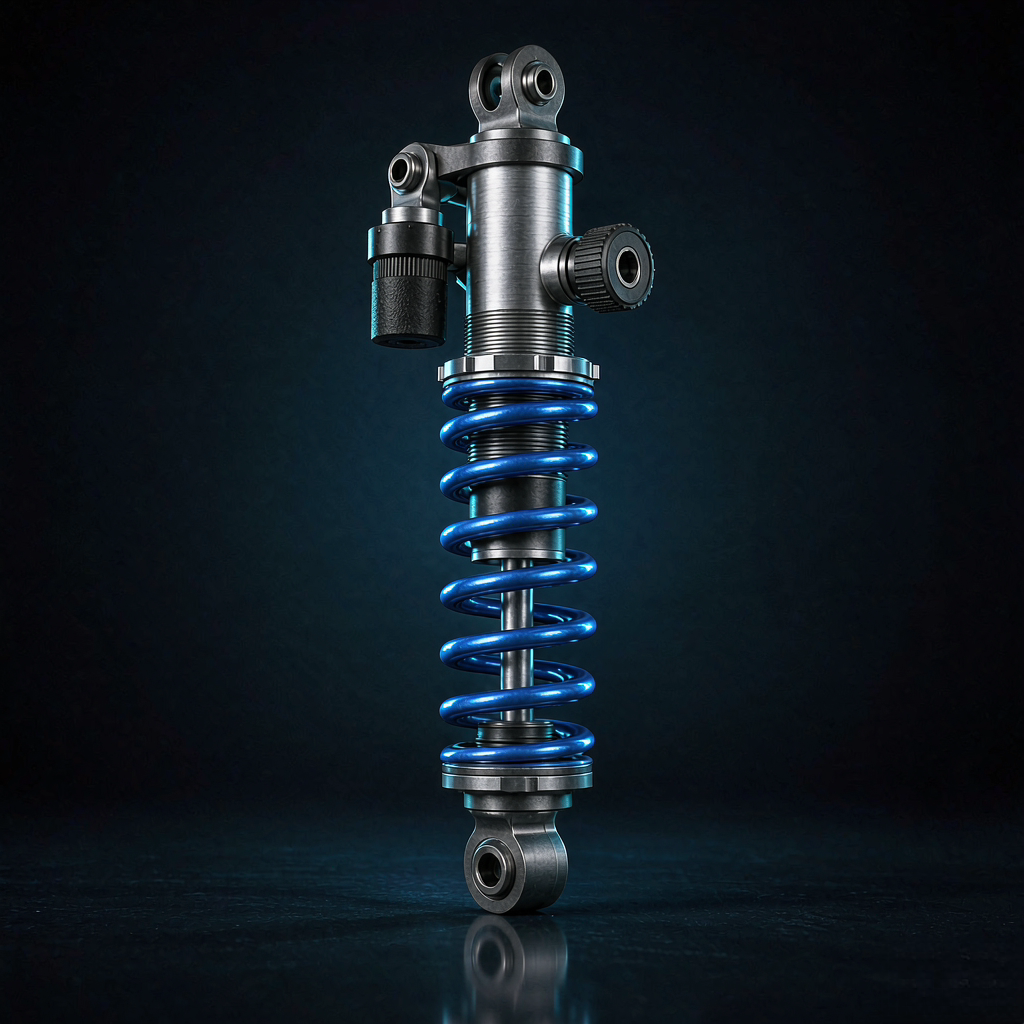
Coilovers put the spring on a threaded perch. Ride height is set with a spanner, independent of spring preload on most quality designs. That means you can dial in stance, correct a raked setup, or raise the car for winter without buying new parts.
Damping: the part nobody warns you about
This is the real difference. A lowering spring on a stock damper changes the spring rate but not the valving — so the shock is now doing a job it was not tuned for. The result is the classic “bouncy lowered car”: harsh over sharp bumps, floaty over crests.
A coilover kit pairs a matched spring with a damper valved for it. Better kits add adjustable damping so you can go softer for daily driving and stiffer for track days.
Spring rates and how stiff is too stiff
- Daily driver / commuter: mild rate increase, damping low. Comfort matters more than lap times.
- Spirited street / weekend canyon: moderate rate, adjustable damping, quality bushings.
- Track-focused: higher rates, corner weighting, camber plates, and a willingness to accept a harsh ride.
- Truck / SUV lift: different problem entirely — you need travel and load capacity, not a lower centre of gravity.
Cost, honesty, and installation
Springs are cheaper up front and cheaper to install. Coilovers cost more but cover both height and behaviour, so most people end up there anyway after their second suspension purchase.
Two things to budget for either way: an alignment after the car settles, and quality top mounts or camber plates if you are going lower than about an inch and a half.
How we build them
Every coilover kit we manufacture is matched to a specific platform — not a generic length. That means correct spring rate for the vehicle weight, correct damper travel so you are not riding on bump stops, and correct top mount geometry for your chassis. Tell us your platform and what you use the car for, and we will quote the spec.
Not sure which way to go? Send us your year, make, and model — or your VIN — and we will confirm what fits before you spend anything. Request a quote, or browse the suspension & chassis range.
Buying for a shop, dealership, or distributor? See our wholesale & RFQ page for volume pricing and custom tooling.